Spiritually Cared For
Updated: May 2
Hello, and welcome back for this week's blog!
Last week, I started a new series where I look at different ethical topics in Anne Fadiman’s book The Spirit Catches You and You Fall Down. In that first post, I tried to think through what it means to do the “right” thing when moral and cultural perspectives clash. This week, I will want to focus on something that honestly made me pause while reading: animal ethics. In the book, Lia’s family practices animal sacrifices as an important part of their spiritual life. At first, I found myself feeling uncomfortable with that. From my own perspective, it's easy to see it as wrong or even inhumane. But the more I thought about it, the more I realized I needed to slow down and really ask why I felt the way I do (going back to my ideas in my last post). Instead of jumping to a judgment, I want to think more carefully about how we should understand the role of animals, especially from a biblical point of view.
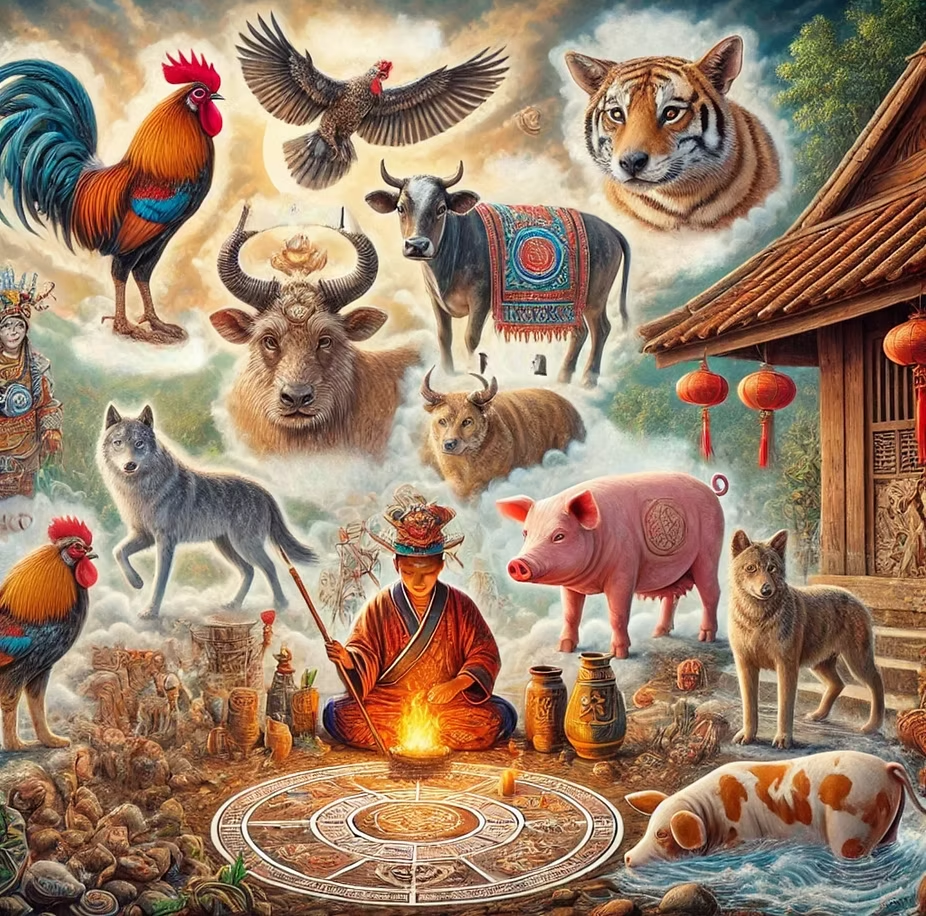
As I looked more closely at the book and Hmong culture in general, it's clear that animals are not simply sources of food or property. They play a deeper spiritual role as animal sacrifice is a central part of healing rituals. In Lia’s case, her condition, understood by her family as “the spirit catches you and you fall down,” was not just a medical issue, but a spiritual one. So, her parents relied on traditional Hmong practices, including sacrificing animals, to restore balance between her body and soul. In Hmong belief, animals act as intermediaries between the physical and spiritual worlds. By sacrificing animals, her family was attempting to heal Lia and protect her spirit. This is very different from how many people in Western cultures view animals today. It may appear inhumane, but within the context of the Lees’ beliefs, these actions are an expression of love and deep concern for their daughter's healing.
You can read more about this by using this link: https://www.pbs.org/splithorn/shamanism1.html
When looking at this from a biblical perspective, the Bible offers a nuanced view of animals. In Genesis 1, humans are described as having “dominion” over creation, but not an unlimited freedom to exploit it. This idea is reinforced by the repeated emphasis that all of creation, including animals, is “good”. Throughout the Bible, God cares for all creatures, not just humans, and they have value because they are created and sustained by God. At the same time, the Bible does permit

the use of animals in certain contexts, like for food, as Genesis 9:3-4 states, “Everything that lives and moves about will be food for you. Just as I gave you the green plants, I now give you everything. But you must not eat meat that has its lifeblood still in it”. This suggests that animals can be used for sustenance, but some boundaries reflect respect for life. When it comes to animal sacrifice, we see various examples in the Bible. In books like Leviticus, animal sacrifices were commanded by God for atonement, purification, and covenant maintenance. At the same time, the Bible also makes it clear that obedience and faith matter more than ritual. As stated in 1 Samuel 15:22, “To obey is better than sacrifice”, showing that sacrifices without genuine faith or moral behavior are. However, the Bible also makes clear that animal sacrifice is no longer required, as Christians believe that Jesus Christ’s death replaces the need for sacrifice—Hebrews 9:28. Put all together, these passages show that while the Bible allows for the use of animals, it also calls for respect and responsibility.

This left me wondering whether something like animal sacrifice is wrong just because of the act itself, or by the meaning behind it? This tension is where ethical reflection becomes important. Christian ethicist David Clough argues that animals should be understood as “fellow creatures of God”, meaning their lives have value beyond their usefulness to human needs. As he explains, “Christians have faith-based reasons to avoid consuming animal products from animals that have not been allowed to flourish as fellow creatures of God”. While the book doesn’t focus on the consumption of animals, I still think the act of sacrifice can still be applied. In other words, the issue is not simply whether humans can use animals, but how we treat them in the process. Since animals are a part of God’s creation, it leads me to believe that ethical responsibility requires consideration of their well-being, not just the needs of humans and tradition.
At the end of the day, this topic definitely pushed me to think more deeply about animal ethics and cultural understanding. It requires taking a step back and understanding that dilemmas like these are not all that simple. Yet, the Bible can provide approaches to animal ethics that call for humility and responsibility. It reminded me that humans are not the center of creation and that all things belong to God, not just us. At the same time, it challenged me to reflect on my practices, whether cultural or medical. More importantly, as I continue to explore more topics, the goal is not to decide whether something is right or wrong, but to better understand how different perspectives view care, respect, and moral responsibility.
Thanks for reading, and stay tuned for the next blog!
~Kate Wright



Comments