It's Not About Winning
Hello and welcome back for the last post in this series of The Spirit Catches You and You Fall Down by Anne Fadiman!
Throughout this blog, I have had the pleasure to break down the book where I posted detailed chapter summaries, and now in these last three blogs, I have been diving deeper into the ethical topics within the book and how we should approach them. As I wrap it up, I want to touch on going about ways to intertwine personal beliefs and culture. Especially in a world like ours with differing viewpoints and ideas, it is important to understand how these perspectives can work together and ease some tensions that might arise because of it.
Reading this novel has completely shifted how I think about ethics, especially in situations where different cultures and belief systems collide. At first, it seemed like a book simply about a medical case gone wrong, but from reading and writing this blog, I have come to understand that the real issue is much deeper. As you may have read many times by now, this book is about how we should understand culture, authority, and care when two fundamentally different worldviews meet.

This is where the framework from the book Christ and Culture by H. Richard Niebuhr becomes useful. In the book, Niebuhr explains that throughout history, Christians have struggled with balancing loyalty to Christ while also living in societies that are shaped by politics, philosophy, and social values that may not fully align with Christianity. Even though Niebuhr is specifically talking about Christianity, his five models can be applied more broadly to situations where belief systems interact. In this case, the conflict between Hmong culture and Western medicine reflects many of the same tensions Niebuhr describes. Rather than mapping one directly onto “Christ” and the other into “culture”, it makes more sense to see both as competing systems of belief and authority. These five models that intertwine the two are all up to interpretation, which makes this ethical dilemma so interesting. Niebuhr even acknowledges this by saying, “The values are many, partly because men are many” (38). Because of this, I want to use Niebuhr’s five typologies as a framework to better understand the different interpretations and responses to this conflict that emerge throughout the book.
To provide context for this discussion, the following article on Hmong beliefs highlights some of their ritual practices, which can help clarify how they compare with Western beliefs and practices.
Here is also a visual to better conceptualize Niebuhr's five models.
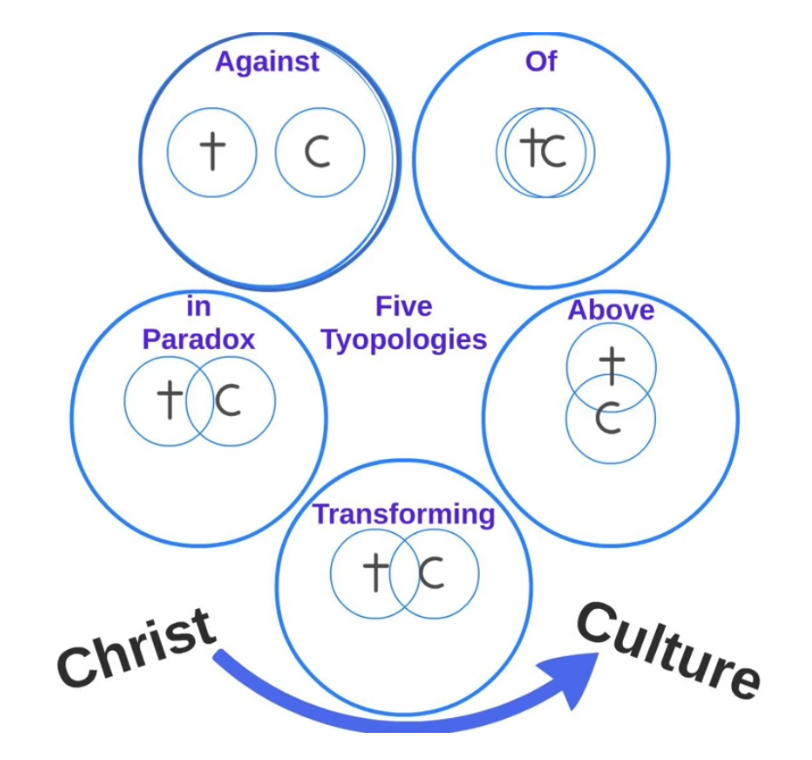
1. Christ Against Culture: Christians believe that worldly cultures are deeply corrupted by sin, so followers should separate themselves from them.
For much of the book, the medical system takes on an “against culture” approach. Doctors often dismiss Hmong beliefs as incorrect or even harmful. In doing so, they strictly adhere to medical instructions. From their perspective, this makes sense. However, this approach overlooks the importance of cultural understanding and ultimately leads to mistrust and noncompliance. This viewpoint also goes the other way, in which the Lees view the prescribed medicine as detrimental to Lia’s spiritual well-being. But this raises questions about respect and autonomy. How do you come to a middle ground if you don’t acknowledge each other and want to interact with each other?
2. Christ of Culture: Tries to bring Christianity and culture into harmony and interpret Christ in ways that fit the values surrounding culture.
At the same time, fully adopting a “of culture” perspective, one where Hmong beliefs are accepted, could also create ethical problems. While it respects cultural traditions, it could mean ignoring medical treatments that have the potential to save a person’s life. It tiptoes the lines between a belief system that doesn’t prioritize science and a medical system that strives for the well-being of its patients. As a result, both sides never fully resolve the issue.
3. Christ above Culture: Christ is seen as higher than culture, which contains both good and flawed elements, in which Christians can participate in cultural life while recognizing that ultimate truth comes from God.
4. Christ and Culture Paradox: Christians participate in a sinful society or worldly responsibilities while also recognizing that human culture can never fully become God’s kingdom
Personally, I think the most helpful ways to understand this situation are through the “Christ above culture” and “Christ and culture paradox” models. The “above culture” approaches that both Hmong spiritual beliefs and Western medicine contain value, but neither is complete on its own. This perspective encouraged integration. In the ideal situation, doctors would respect and incorporate the family’s beliefs while still providing effective medical care. This could look like allowed space for spiritual practices alongside treatment to build trust and cooperation. However, the “paradox” model feels more realistic because it acknowledges that some conflicts can never come to a resolution. The doctors and the Lee family are operating with fundamentally different understandings of the world. One sees epilepsy as a neurological disorder, and the other sees it as spiritually induced. These perspectives are not easily reconciled. This created a situation where both sides are trying to do what is right, yet their actions lead to hard feelings because they cannot fully work together to bridge the gap between them.
Going back to my first blog post on ethical analysis, “Navigating Ethical Differences with Compassion”, this is what makes this story tragic. It’s not a case of one side being objectively right or wrong. Instead, it shows how good intentions aren’t always enough when there isn’t a mutual understanding and connection between both sides. The ethical failure at hand is not about making the correct medical decision to save Lia’s life, but in their inability to understand each other.
5. Christ transforming Culture: Culture is fallen but capable of redemption as Christians actively work to change culture according to their values.
Looking at this issue in our lives today, I think this concept of “transforming culture” is what the healthcare system should strive for. This would mean creating a more culturally accepting system that does not simply expect patients to conform, but instead adapts to meet them where they are. This could include better use of interpreters (something the Lees lacked at Merced), education about cultural beliefs, and a genuine willingness to collaborate with patients and their families rather than override them. Transformation doesn’t mean abandoning the medical system altogether, but recognizing that effective care requires both medical and cultural sensitivity.
Ultimately, this book has taught me that ethical decision-making is rarely black and white. It’s not about choosing the “right” treatment, but about understanding the people involved and the things that shape their behaviors. The conflict between Hmong culture and Western medicine is a powerful example of how easily harm can occur when we fail to see beyond our own perspectives. Using Niebuhr’s framework has helped me realize that these tensions are a part of a greater challenge that is going on in our world. He says, “neither individual nor church can come to a stopping place in the endless search for an answer” (39), meaning neither side can arrive at a “perfect” solution that satisfies everyone. There is this endless search for an answer, as every answer will spark new questions, disagreements, or criticisms, but it's how we understand and go about these situations that makes an impact. Understanding this has changed the way I think about ethics. So the goal should not be to “win”, but to find ways to respect and care for others to promote a more compassionate world where different perspectives can coexist more effectively.
Thank you for following along with these blog posts, and God bless!
-Kate :)



Comments