Navigating Ethical Differences with Compassion
Updated: May 2
Hello!
I am excited for this next section of my blog. In my previous posts, I’ve been reading The Spirit Catches You and You Fall Down by Anne Fadiman—feel free to check those out if you’d like a fuller summary of the story and its key themes and events. Or you can watch this short 2-minute video summary of the book for a quick refresher!
As I move into these next blogs, I want to shift away from just summarizing the book and start to really think through some of the ethical issues in Lia's story. Especially as a Christian, I'm interested in looking at them through a biblical lens, focusing on questions about culture, medicine, and responsibility. My goal is not only to better understand the conflict in Lia’s story, but to reflect on how we might respond thoughtfully and faithfully to similar situations. For this first blog, I will be focusing on what it truly means to do the “right thing” and what that might look like in real life.

When reading Lia's story, what stood out to me most wasn't just the failure of medical treatment but, more importantly, the profound ethical conflicts that arise. It made me realize that the central issue is not a lack of care, because both her parents and her doctors clearly cared about her. Instead, it felt like a clash between fundamentally different understandings of what it means to do the “right thing”. That's what made it so complicated, as their ability to reconcile their moral perspectives ultimately contributed to Lia’s suffering. What appears on the surface as miscommunication is, in reality, a deeper divide in personal and cultural beliefs of what is “right” and “wrong”. This divide is evident from the very beginning of Lia’s diagnosis. As Anne Fadiman explains, “Dan had no way of knowing that Foua and Nao Kao had already diagnosed their daughter's problem as the illness where the spirit catches you and you fall down. Foua and Nao Kao had no way of knowing that Dan had diagnosed it as epilepsy” (Fadiman 28). These very different

interpretations of the same symptoms caused each party to respond in contradictory ways. While Lia’s doctors wanted to treat her condition with medication to help eliminate her seizures, her parents felt that too much medication would interfere with her spiritual healing. As a result, each group acted in ways they believed were morally responsible, yet what one side viewed as life-saving, the other viewed as potentially harmful.
Curious about Hmong spiritual healing that occurs in the book? Check out this website!
This dilemma raises important ethical questions reflected in Christian teaching. In the Bible, Matthew 7:12 says, “Treat others as you would like them to treat you.” While this principle seems simple, Lia’s story complicates it. What happens when one person believes is best directly conflicts with what another believes is right? This reveals the limitations of treating others as we would want to be treated, which may not be enough if we don’t consider how the other person understands care and well-being.
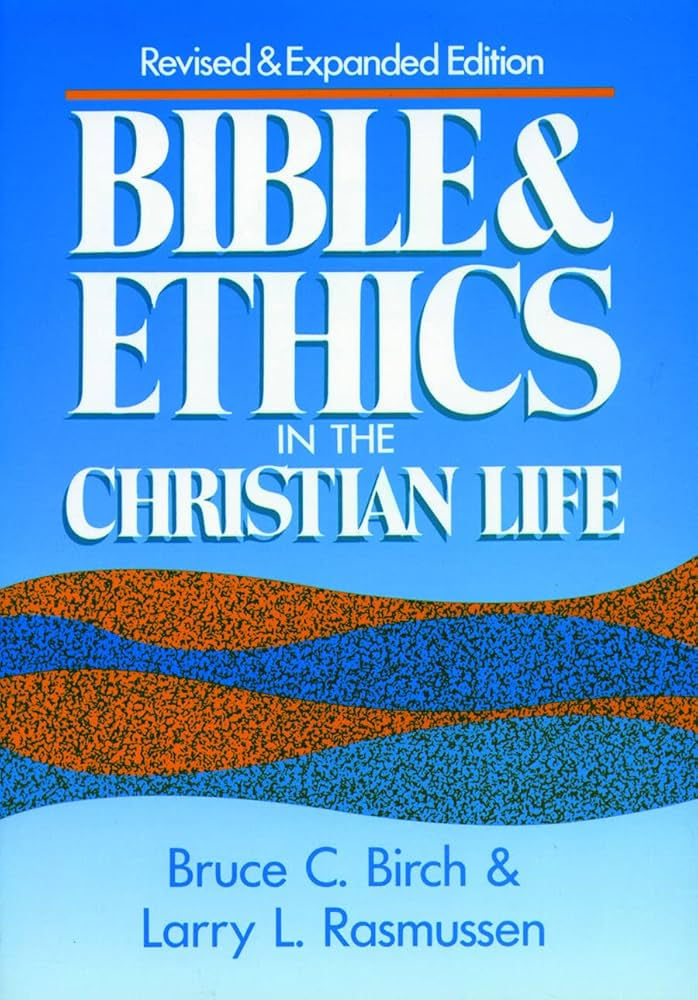
At the heart of this conflict is what Bruce C. Birch and Larry L. Rasmussen describe in their book Bible and Ethics in the Christian Life. They introduce the moral vision, in which individuals interpret the world and the vision of the “good we hold, a part of which is how we perceive and regard ourselves and others” (Birch & Rasmussen 59). Humans are naturally moral characters and are constantly aware of what “is” and “ought” to be. For Lia’s parents, their vision was shaped by Hmong spiritual beliefs, in which Lia’s epilepsy was caused by an imbalance of her soul. Healing, therefore, required spiritual intervention and respect for their cultural traditions. In contrast, the doctors operated within a medical vision that defined epilepsy as a neurological disorder that required strict medical compliance. Because vision “confers status upon that which is of greater importance and lesser” (Birch & Rasmussen 60), each side perceived the other as acting irrationally and that their way was better. The doctors saw the Lees as negligent, while the Lees viewed the doctors as threatening to Lia’s spiritual well-being.
This raises the questions of what we are morally required to do and to whom we are to help. This requires judgment of what Birch and Rasmussen call “moral obligation.” The doctors felt obligated to follow medical protocols when they thought Lia’s life was at risk. This sense of duty is what led to their decision to place Lia in foster care, reflecting their commitment to legal and professional standards. On the other hand, Lia’s parents felt a deep obligation to preserve and honor their cultural traditions to maintain family unity. This was both sides’ attempt to fulfill their moral duties, yet their obligations were incompatible as “there is a deeper level of obligation and relationship that accompanies life itself” (Birch & Rasmussen 53). The emphasis on desired outcomes or moral goods explains how Lia’s well-being couldn’t be separated from the broader concerns of one’s values, whether it's obeying the law, medical practices, or spiritual practices.
Virtue then becomes a big part of the story. Birch and Rasmussen frame virtue as the development of moral character that enables individuals to do good, asking “what is a good person?” or “what is a good society?” Since each side exhibits virtues in its own context, the situation reveals the lack of certain virtues such as humility, patience, and empathy. The medical system failed to practice cultural humility, dismissing the Lees’ beliefs rather than seeking to better understand them. This absence of rational virtue prevented the development of trust and compassion, which were essential for effective and cooperative care.

Yet it's important to note that the Bible teaches that “anyone who does not love does not know God, for God is love”, 1 John 4:8. This verse changes the conversation beyond simply being “right” or “wrong” and instead centers it on how we should treat others in the midst of disagreement. For God, love is an active commitment to seek the good of another person, even if their beliefs do not coincide with ours. I truly believe that this requires humility in admitting that our perspective may not always be complete and patience when differences arise. When we go through our lives and come across similar situations, the love that the Bible is a reminder to slow down and understand another person's values. Love does not erase disagreement, but reshapes how we respond. For Lia’s doctors, this might have looked like engaging more with her family’s cultural and spiritual beliefs rather than judging and dismissing them. For her parents, it might have meant finding ways to trust and work with medical systems.
When thinking about Lia’s story, I keep coming back to how complicated doing the "right thing" really is. At first, it seems like someone must have made the wrong choice, but the more I reflect, the more I realize that wasn't really the issue. Everyone cared deeply about her, which makes it harder to point a finger at a clear failure. Instead, it feels like the real problem was the inability to bring their different values and build meaningful relationships with those cultural differences. I find myself wondering if things could have been different if there had been more effort to include both perspectives from the beginning. Maybe a more balanced approach that respects both the doctor's responsibility to treat Lias and her family's beliefs. At the same time, I'm realizing that even with the best intentions, it's not always easy to reconcile those differences, especially ones that have been solidified for decades or centuries. This makes me think more about what we are actually called to do in situations like this. I don't think it's always about finding a perfect answer, but more about choosing to act with care and a willingness to listen and understand. Lia's story is a good reminder that ethical decisions aren't just about being "right", but about how we engage with those whose perspectives are different from our own.
Thank you for reading, and I'll see you next week for another post! ~Kate Wright



Comments