Opening Our Eyes To Disability
Updated: May 2
Hello and welcome back!

In this week’s blog, I want to discuss disability, a topic that can be difficult, but one that is important to explore to better understand situations like Lia’s. In The Spirit Catches You and You Fall Down, Lia was diagnosed by her doctors with severe epilepsy. In a previous post, I discussed how her condition was understood differently by her parents versus her doctors, but when thinking about her story overall, it becomes clear that the issue isn’t just medical. It goes deeper into how we see disability itself. It raises an important ethical question about whether disability should be something to “fix” or something that holds more meaning.
What to do if you are experiencing someone having a seizure
I've noticed that my first instinct, and I think this is true for a lot of people, is to see disability as something tragic or something that needs to be fixed. Naturally, it can be easy to judge and categorize them as “different”. This is similar to how the doctors approached Lia and her condition. They almost entirely focused on what was “wrong”, without building a relationship with her or her family and what it meant to them. Hans S.

Reinders challenged me to rethink that. He pushes away from this mindset in his Parenting the Mentally Disabled, arguing that disability shouldn’t be viewed as a problem to solve, but as part of the human experience that calls for deeper reflection. More specifically, he says that there is a difference between "choosing to be with the disabled rather than to do something for them" (Reinders 433). Reading this made me pause and really rethink. Disability ethics, then, is not only about what actions we take, but whether we are willing to see and respect different ways of understanding a person’s life.
A biblical perspective further challenges modern assumptions about disability. In the Bible, John 9, Jesus sees a man who was born blind, and when people ask if it was because his parents sinned, Jesus rejects it entirely, saying, “This happened so the power of God could be seen in him” (verse 3). He then formed mud from dirt and his spit and spread it over the man’s eyes, who was instructed to go wash it off, and he came back
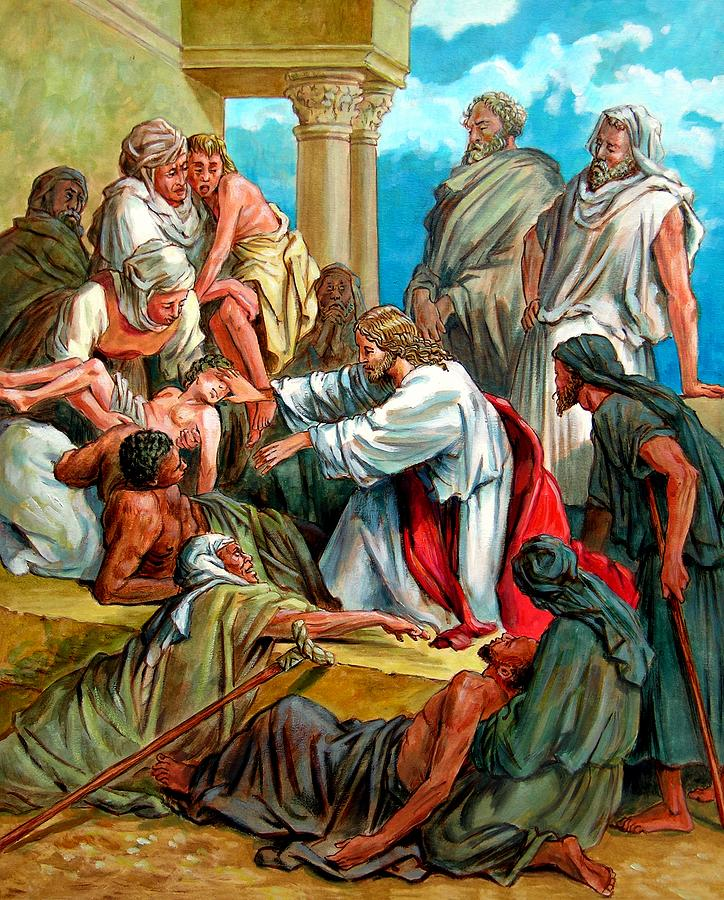
being able to see. This mud, in a way, mirrors the creation of Adam in Genesis, who was formed from the earth. It shows how creation is still happening and that we are made new through Him. Instead of framing disability as a punishment or failure, Jesus shows that God’s presence and work are continuously at work. Disability, then, is not defined in negative terms but in how God can use it to show a bigger picture of love and healing. More importantly, it invites us to recognize one’s dignity and purpose, and through them, we can see that God has a deeper meaning in his actions.
In other parts of the Bible, we also see Jesus as a model for inclusion and compassion. In the Gospels, it isn’t just about Jesus healing people with disabilities; it’s how he interacts with them that really stands out. He doesn’t define them by their condition or treat them as a burden. Instead, he consistently restores them and their place in the community. In the Gospel of Luke 14:12-24, for example, Jesus tells a parable in which a host is instructed to invite “the poor, the crippled, the lame, and the blind” to a banquet. These people were often excluded or overlooked in society, yet in the parable, they are actually honored guests. This reflects God’s Kingdom, where belonging isn’t based on status or ability, but on one's inherent worth. Every person is welcomed and recognized as being created in God’s image.

When I connect this back to Lia’s story, her case was merely seen as a medical problem that needed fixing. Yes, while her condition was life-threatening and did need medical intervention, what the doctors failed to do was think about her epilepsy as more than just a clinical diagnosis. They overlooked the broader meaning her condition held within her family’s cultural beliefs. It highlights how this gap can unintentionally reduce a person to just their condition. Lia was not just a patient, but a daughter, sister, and a girl whose life held value beyond her illness. While immense care was provided for her, it fell short of truly honoring Lia as a whole person.
It reframes the question of what it truly means to care for someone. Maybe it's not about how to “fix” or eliminate disability, but maybe it's we should honor and respect this person. When reflecting on this, it made me more aware of my instictual ideas about disability. Now, I can see how important it is to see people as children of God, made in his image, and to get to know them as autonomous humans. This includes listening more carefully, valuing different perspectives, and recognizing that one’s worth does not define one's abilities but that our worth comes from God alone. In this way, ethical care isn’t about intervention but ensuring every person, regardless of ability, is seen, valued, and treated with love.
“Don’t just pretend to love others. Really love them. Hate what is wrong. Hold tightly to what is good. Love each other with genuine affection, and take delight in honoring each other.” Romans 12: 9-10 (NLT)
~Kate Wright


Comments